
You’re preparing your content strategy for the year and you add a whitepaper or two.
Hold it.
Think:
☑️ Are you doing it to tick items off a list?
💲 To win a bigger marketing budget?
🖤 Or does your strategy truly call for it — because you have a product or service that offers a new way of solving old problems?
Figure out if you really need a whitepaper in your content strategy with our B.L.A.C.K. list for whitepaper development:
This post was first sent to Rise newsletter subscribers on October 11, 2024. Be the first to read our tips and insights next time. Subscribe to Rise now
The B.L.A.C.K. List for whitepaper development
You have a good case for developing a whitepaper if:
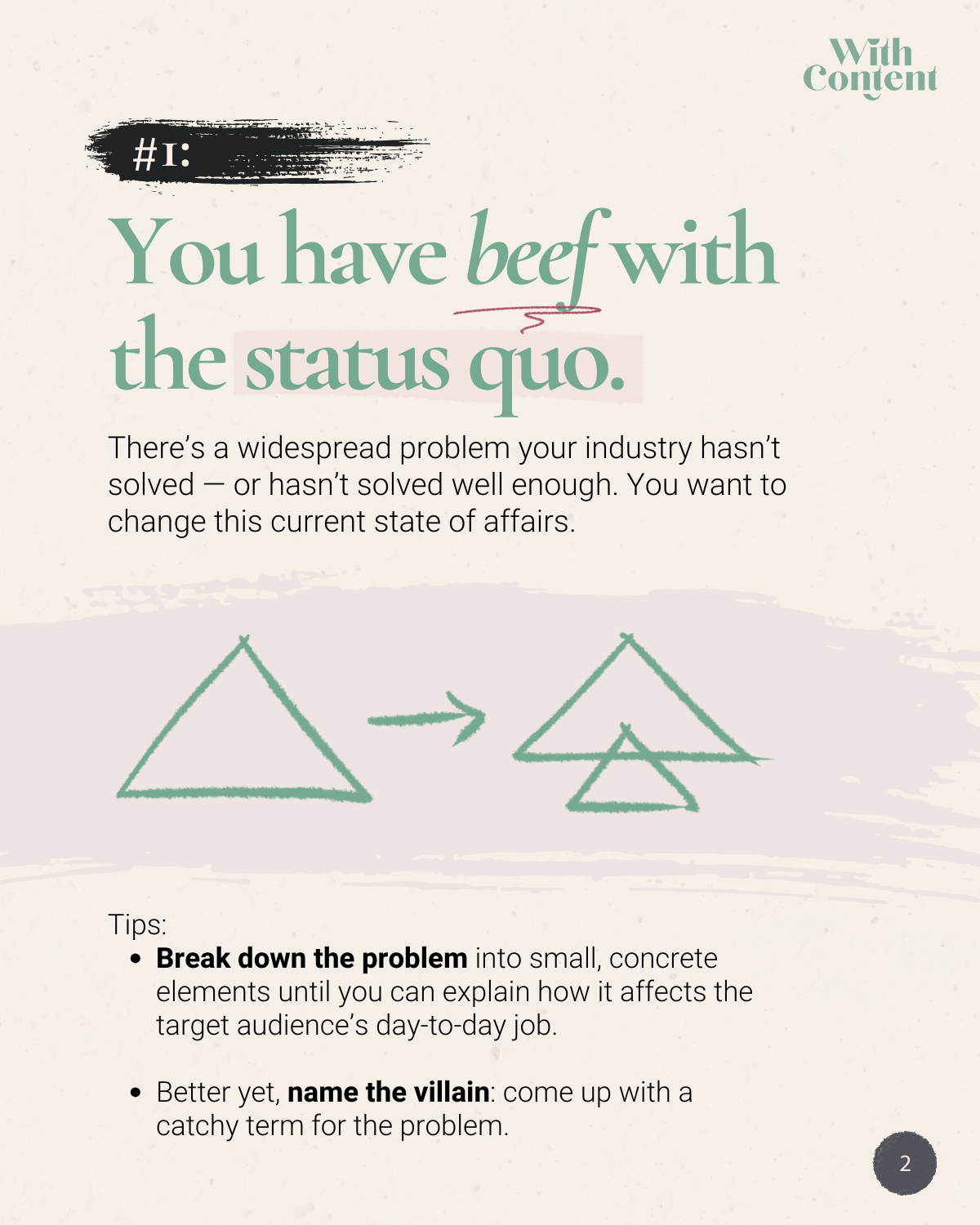
1. You have beef with the status quo.
There’s a widespread problem your industry hasn’t solved — or hasn’t solved well enough. You want to change this current state of affairs.
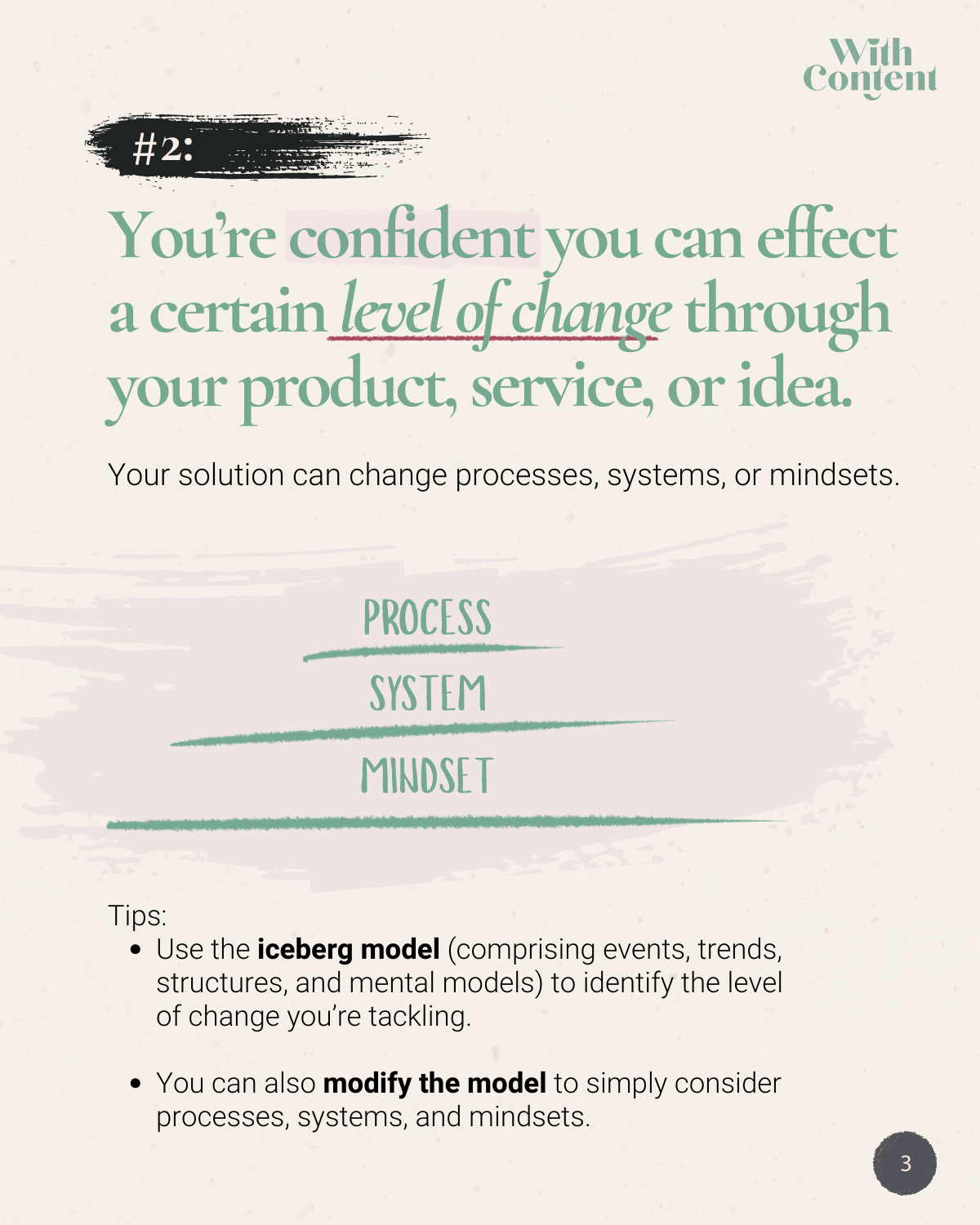
2. You’re confident you can effect a certain level of change through your product, service, or idea.
Your solution can change processes, systems, or mindsets.
3. You have a hypothesis to advocate for.
You have a proposal for how to frame the problem and implement your solution.

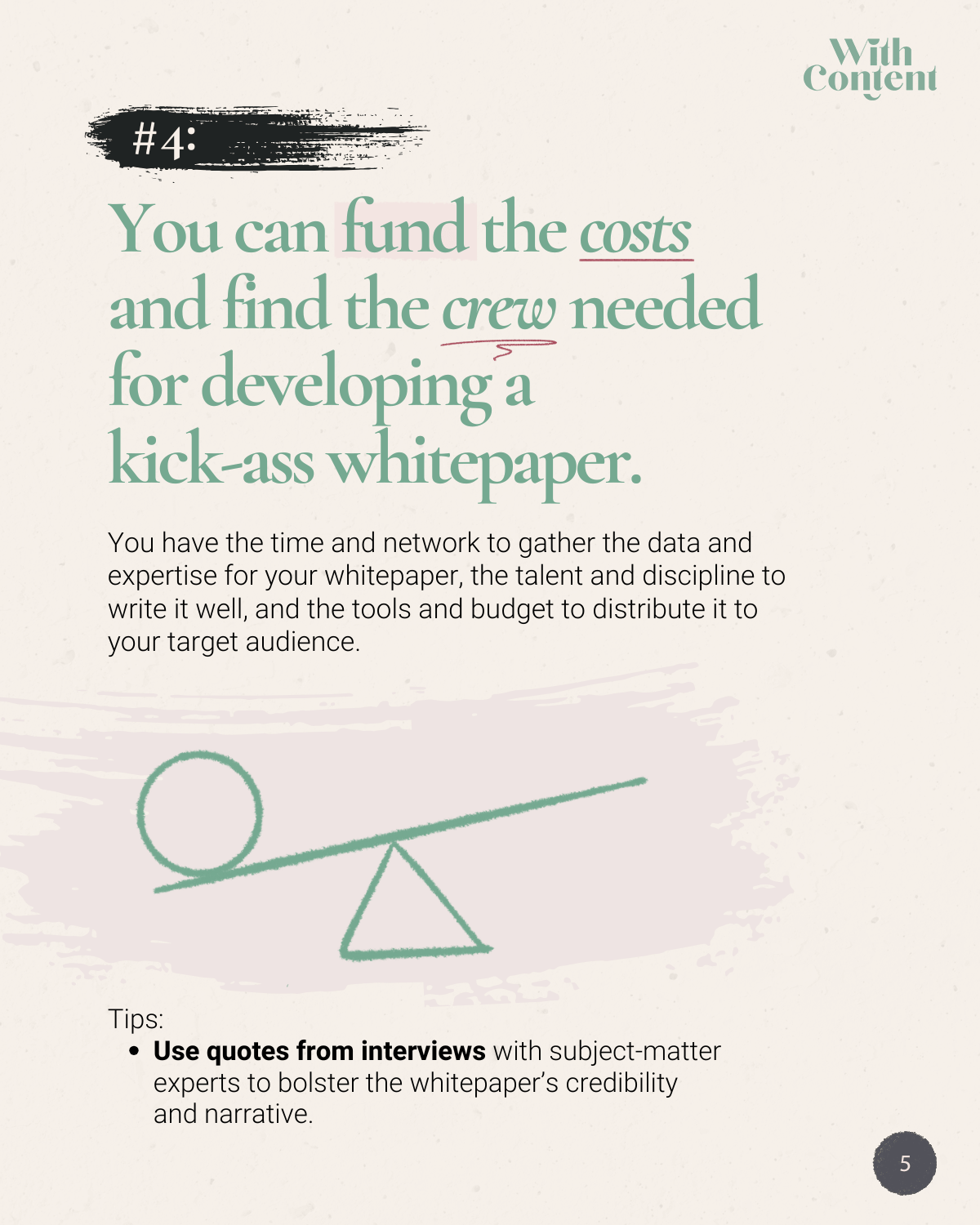
4. You can fund the costs and find the crew needed for developing a kick-ass whitepaper.
You have the time and network to gather the data and expertise for your whitepaper, the talent and discipline to write it well, and the tools and budget to distribute it to your target audience.
5. Your whitepaper fits into your strategy kernel.
Producing this whitepaper supports your content strategy core and, as a result, helps you achieve business goals.

If you check all the requirements above, you can use The B.L.A.C.K. List as a guide for how to make the case to your boss and win a budget for whitepapers.
The B.L.A.C.K. List in action
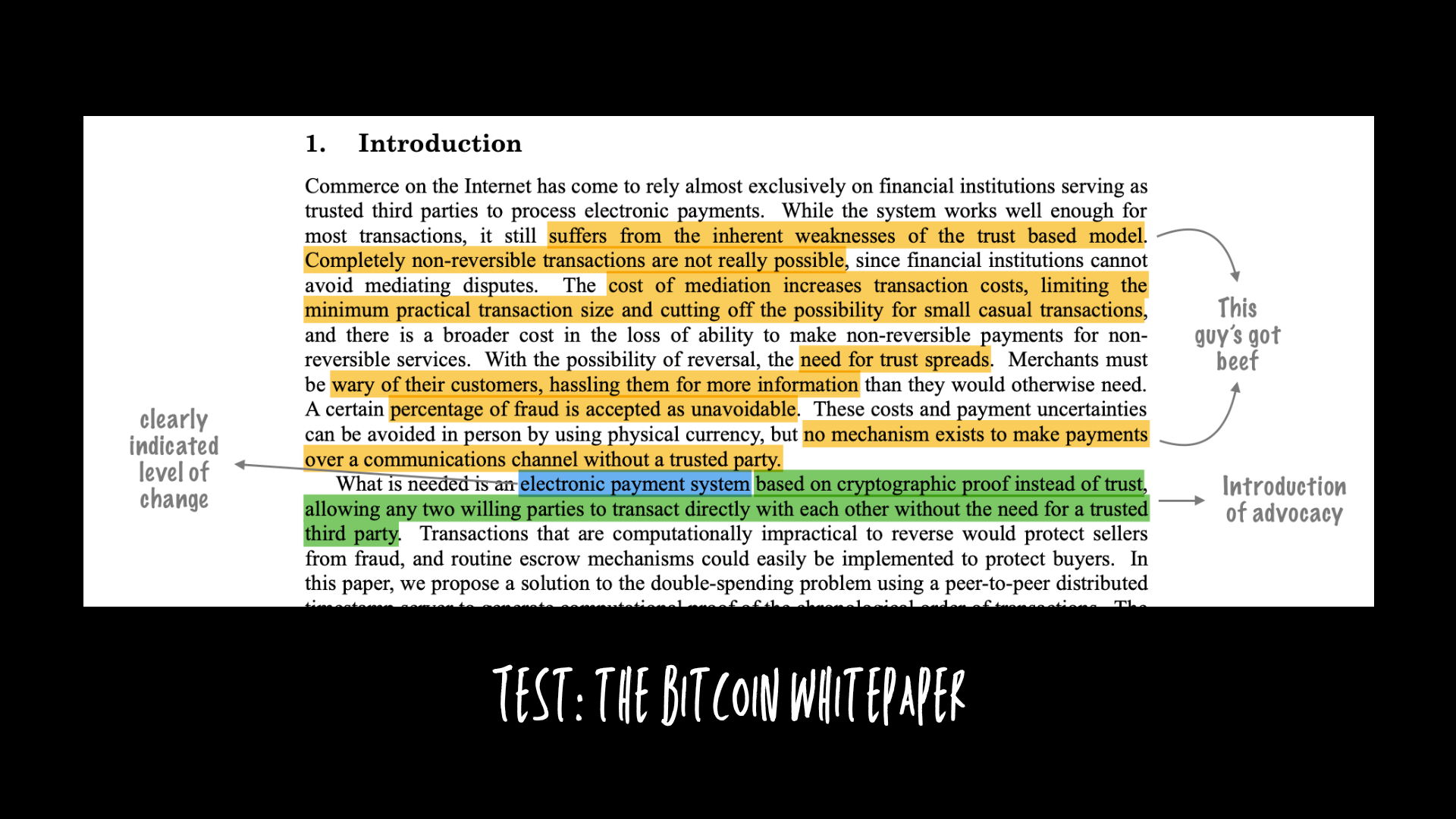
To test The B.L.A.C.K. List, we studied one of the most influential whitepapers of our time — the bitcoin paper by Satoshi Nakamoto.
(For brevity’s sake, the points below are an oversimplification of Nakamoto’s whitepaper.)
- Beef with the status quo – The whitepaper starts by pointing out the pitfalls of relying almost exclusively on financial institutions to facilitate commercial transactions.
- Level of change – The proposed solution, cryptography-based systems of exchange like bitcoin, represents a systemic change.
- Advocacy – Nakamoto called for the decentralization of financial systems and the establishment of a trustless cash system.
- Costs and crew plus Kernel of strategy – Since no one knows the true identity of Nakamoto — and even whether he’s an individual or a group of people — we don’t know what his resources and strategy were at the time he developed the whitepaper. But looking at how far and wide cryptocurrency has spread, we can infer that he had the funds, talent, and community in place, and that the whitepaper served his mission of introducing a new way of transacting.
The first three elements capture the audience from the very start:
5 quick tips for The B.L.A.C.K. List
Even after you get executive buy-in to produce a whitepaper, The B.L.A.C.K. List still comes in handy. Consider these tips as you develop your whitepaper:
- Beef with the status quo – Break down the problem into small, concrete elements until you can explain how it affects the target audience’s day-to-day job. Better yet, name the villain: come up with a catchy term for the problem (real-life examples of coined terms for problems include “copycat content”, “toxic positivity”, and the “procrastination monkey”).
- Level of change – Use the iceberg model — comprising events, trends, structures, and mental models — to identify the level of change you’re tackling. (You can also modify the model to simply consider processes, systems, and mindsets.)
- Advocacy – Use a metaphor, a catchy phrase, or an acronym to express your hypothesis and solution. Real-life examples include the strategy kernel, 5 Whys, and BHAG (Big Hairy Audacious Goal).
- Costs and crew – Use quotes from interviews with subject-matter experts to bolster the whitepaper’s credibility and narrative.
- Kernel of strategy – Anchor the whitepaper’s message to your brand message and create a distribution and repurposing plan to maximize its impact.
- Beef with the status quo – Break down the problem into small, concrete elements until you can explain how it affects the target audience’s day-to-day job. Better yet, name the villain: come up with a catchy term for the problem (real-life examples of coined terms for problems include “copycat content”, “toxic positivity”, and the “procrastination monkey”).
- Level of change – Use the iceberg model — comprising events, trends, structures, and mental models — to identify the level of change you’re tackling. (You can also modify the model to simply consider processes, systems, and mindsets.)
- Advocacy – Use a metaphor, a catchy phrase, or an acronym to express your hypothesis and solution. Real-life examples include the strategy kernel, 5 Whys, and BHAG (Big Hairy Audacious Goal).
- Costs and crew – Use quotes from interviews with subject-matter experts to bolster the whitepaper’s credibility and narrative.
- Kernel of strategy – Anchor the whitepaper’s message to your brand message and create a distribution and repurposing plan to maximize its impact.
Let’s raise the bar of content marketing in Southeast Asia
Ready to create a compelling whitepaper that gets you on B2B buyers’ lists? Work with our team of trained journalists, B2B content strategists, and multimedia storytellers.
Reach out at hello@withcontent.co.
—
200+ industry-leading tech companies in Southeast Asia are happy clients of With Content. Join them and start delivering valuable content to your potential customers today.